Victor Johnson
Remember when almost every conversation about building reliable AI applications eventually led to Retrieval-Augmented Generation (RAG)? Throughout 2025, RAG remained one of the most discussed approaches for connecting large language models (LLMs) with external information. AI engineers experimented with vector databases, embedding models, document chunking and retrieval pipelines to build applications that could answer questions using information beyond their training data. For many developers, building a RAG pipeline became one of the first practical steps towards developing real-world generative AI applications.
Fast-forward to 2026, and the conversation feels different. AI engineers are increasingly discussing autonomous agents, context engineering, long-context models, persistent memory and the Model Context Protocol (MCP). Technical conversations that previously focused on document retrieval now examine how AI systems use tools, maintain information across tasks and make decisions during complex workflows. The emphasis has gradually shifted from helping an LLM answer a question to helping an AI system complete an entire task.
Does this mean AI engineers are no longer interested in RAG? Has Retrieval-Augmented Generation become outdated, or has it simply become a familiar component of modern AI architecture? The answer is more interesting than declaring RAG dead. RAG remains important, but the problems AI engineers are trying to solve have expanded beyond traditional document retrieval. Understanding this shift explains why RAG may receive less attention as a standalone concept while continuing to support many production AI systems.
Why Was RAG Such a Hot Topic in 2025?
During 2025, one of the most common challenges in building applications with large language models was giving them access to information they had not encountered during training. LLMs could write convincing explanations, summarise documents and answer general questions, but they could not automatically access a company’s internal policies, updated technical documentation, customer records or recently published information. Even when a model understood the subject, it could produce outdated or unsupported answers because it lacked the necessary facts.
Retrieval-Augmented Generation provided a practical solution by connecting language models to external information sources. Instead of expecting a model to answer entirely from its training data, developers could retrieve relevant documents and include them in the model’s input. The model could then generate a response using the supplied evidence. This approach was particularly attractive for enterprise knowledge assistants, document search systems, customer support applications and internal question-answering tools because organisations could use existing information without retraining a language model whenever their documents changed.
The growing popularity of vector databases and AI development frameworks also contributed to RAG becoming a major topic. Developers could upload PDF documents, divide them into smaller sections, generate embeddings and store those representations in a searchable database. When someone asked a question, the application would retrieve semantically related passages and send them to an LLM. This workflow made it possible to create document-based chatbots and knowledge assistants with relatively accessible tools, which encouraged experimentation across businesses, research teams and individual developer projects.
However, the popularity of RAG was not simply the result of developers following a trend. It addressed a genuine limitation of language models: their inability to reliably access private, frequently updated or organisation-specific knowledge. RAG also introduced a practical way to connect generated answers with supporting documents, allowing users to examine the information behind a response. Although early implementations often followed similar patterns, the underlying problem was real, and it remains relevant today.
Why Is RAG No Longer the Biggest Talking Point in AI Engineering?
RAG has not disappeared from AI engineering, but its position within the wider conversation has changed. During the earlier stages of generative AI application development, creating a chatbot that could answer questions using external documents was an important achievement. By 2026, the basic retrieval-and-generation pattern had become familiar to many developers. The more challenging questions increasingly concerned how AI applications should behave when they needed to perform multiple actions, combine information from different sources or continue working as new information became available.
This shift is closely connected to the development of AI agents. Traditional RAG applications usually follow a relatively predictable sequence: a user submits a question, the system retrieves relevant passages and the language model generates an answer. An AI agent may need to follow a more flexible process. It might inspect a document, recognise that additional evidence is required, search another source, call an external tool and reconsider its next action based on the results. Retrieval remains useful in this process, but it becomes one part of a larger workflow rather than the entire application.
Consider an AI assistant investigating why an online payment failed. A traditional RAG system might retrieve documentation explaining common payment errors and provide troubleshooting suggestions. A more capable agent could examine authorised transaction logs, check the payment gateway response, inspect relevant configuration details and compare the incident with previous failures. The task requires access to several kinds of information, some of which may be better obtained through APIs or database queries than through semantic document search. This is why conversations about AI engineering increasingly focus on tool orchestration, task planning, context management and multi-step execution.
Another important development is the growing attention given to context engineering. While RAG focuses on retrieving information to support generation, context engineering considers the broader collection of information supplied to a model throughout a task. This may include retrieved documents, conversation history, system instructions, tool responses, stored memory and application state. Developers must decide which information should be included, when it should be updated and whether older information should remain available. RAG fits naturally into this process, but context engineering addresses a wider set of requirements.
Larger context windows have also influenced architectural decisions. Modern language models can process substantially more information in a single request than earlier models, allowing some applications to work directly with complete documents instead of retrieving individual passages. For example, when comparing three short contracts, providing all three documents may be simpler than building a dedicated retrieval pipeline. Nevertheless, larger context windows do not eliminate the need for retrieval. Sending large collections of irrelevant information can increase processing costs, consume tokens and make important details harder for the model to identify. The question has therefore shifted towards selecting the most suitable information strategy for each task.
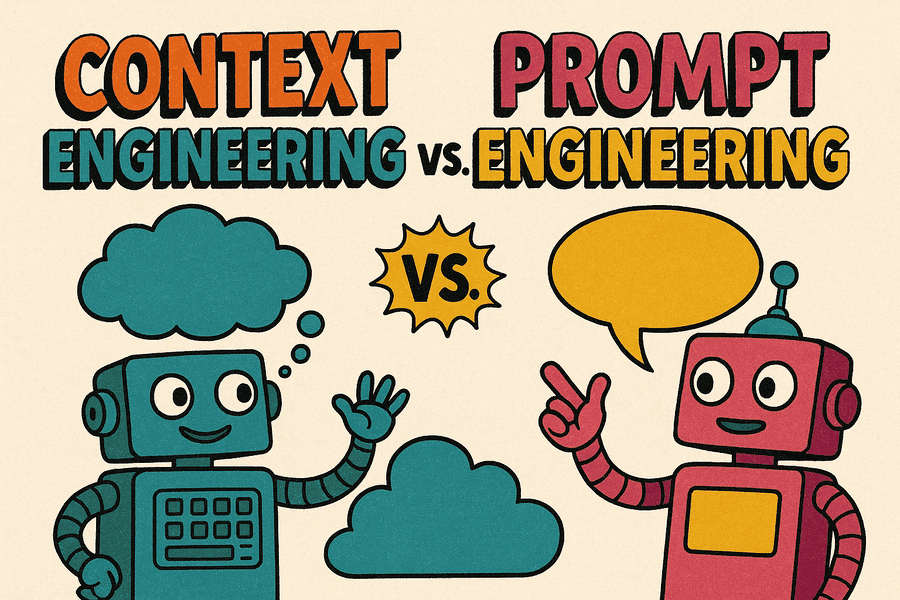
For a closer look at this broader shift, see Context Engineering vs Prompt Engineering: Key Differences, Examples and When to Use Each.
Is RAG Dead in 2026?
No, RAG is not dead in 2026. It is becoming a more established component of AI application architecture rather than the central topic of every engineering discussion. There is an important difference between a technology receiving less attention and becoming less useful. Many technologies remain essential long after they stop dominating industry conversations. Databases, APIs and caching systems may not always attract the same excitement as emerging technologies, but modern software continues to depend on them. RAG appears to be moving towards a similar position within parts of the AI ecosystem.
The change is partly a reflection of how developers are approaching more complicated applications. Instead of asking how to add document retrieval to an LLM, engineering teams are considering how retrieval should interact with memory, tools, structured data and agent workflows. An application might use RAG to search technical documentation, an API to obtain current operational information and a memory component to preserve decisions across several interactions. In this architecture, retrieval remains important, but it is no longer expected to solve every problem independently.
This shift has also been discussed in technical publications. A January 2026 article in The New Stack examined how context engineering was attracting greater attention while RAG continued to serve as an important part of AI systems. Research into retrieval has also continued, including work on hybrid search, iterative retrieval, evidence selection and agent-based approaches. These developments suggest that RAG is evolving rather than disappearing. The more useful question for developers is no longer whether RAG is fashionable, but whether it provides a reliable and efficient way to solve the information problem in a particular application.
What Problems Does RAG Still Solve in 2026?
Despite improvements in language models, several fundamental problems remain difficult to solve without external information retrieval. A model may be capable of understanding complex instructions and reasoning through a task, but that does not mean it automatically possesses the facts required to complete it. Model capability and access to reliable information are separate concerns, and RAG continues to address this distinction.
Accessing Private and Organisation-Specific Knowledge
One of RAG’s most valuable applications is connecting language models to information that was never included in their training data. Organisations maintain internal documents covering employee policies, operational procedures, product specifications, technical decisions and customer support processes. This information may be confidential, highly specialised or unavailable outside the organisation. An LLM cannot be expected to know these details automatically, regardless of how capable it becomes.
RAG allows an application to search authorised knowledge sources and provide relevant content when answering a question. For example, an employee asking about reimbursement rules could receive an explanation based on the company’s latest approved policy rather than a generic description of reimbursement practices. The application can also identify the document supporting the response, allowing the employee to check the original information. This remains a strong use case because private organisational knowledge cannot simply be replaced by general model intelligence.
Working With Frequently Updated Information
Another important problem is the changing nature of information. Product prices, inventory records, technical documentation, subscription plans and company policies may be updated regularly. A language model’s training process does not provide automatic access to these changes, which means its internal knowledge may not reflect the latest available information.
RAG can help by retrieving information from maintained sources when the application needs it. Imagine a customer support assistant answering questions about a company’s subscription plans. If the business changes its pricing or introduces a new feature, the assistant should use the updated information rather than rely on older details. A retrieval-based system can access revised records without retraining the underlying model. However, the retrieval pipeline must also be maintained properly. If the search index contains outdated information, the model may still generate an incorrect answer despite using RAG.
Providing Evidence and Supporting References
RAG also remains useful when users need to understand where an AI-generated answer came from. In research, enterprise knowledge management and technical support, a convincing explanation is not always sufficient. Users may need to examine the original source, confirm a particular statement or understand which document supports a recommendation.
A research assistant could retrieve relevant papers and include references alongside its explanation, while an internal knowledge assistant might identify the policy document used to answer a question. This improves traceability and makes it easier to investigate questionable responses. Nevertheless, displaying citations does not automatically guarantee correctness. A model can cite an irrelevant passage or misinterpret correctly retrieved evidence. Reliable applications should therefore evaluate whether the cited material genuinely supports the answer.
Searching Large Knowledge Bases Efficiently
Large organisations may maintain millions of documents, records and knowledge entries. Even with improvements in context window sizes, supplying an entire enterprise knowledge base to a model for every question would be impractical. The application needs a way to identify which information is relevant before sending it to the model.
RAG addresses this by narrowing a large information collection to a smaller set of potentially useful passages. A technical support assistant might search thousands of troubleshooting articles but only need a few sections related to a particular error. Selecting these passages can reduce unnecessary context and potentially improve response efficiency. The challenge is ensuring that the retrieval system identifies the right information rather than simply returning text that appears semantically similar.
Reducing Unsupported AI Responses
Language models can generate confident responses even when the information available to them is incomplete. RAG can reduce some unsupported answers by supplying external evidence that the model can use when responding. If someone asks about a company’s refund conditions, retrieving the actual refund policy provides a stronger basis for the answer than relying on general assumptions about how refunds usually work.
However, RAG does not eliminate hallucinations. The retrieval system may return irrelevant documents, overlook an important exception or provide conflicting information. The model may also misunderstand the evidence. Google Research’s 2025 work on sufficient context highlighted the importance of distinguishing between information that appears relevant and information that is actually sufficient to answer a question. This means successful RAG depends not only on retrieving documents but also on evaluating whether those documents contain enough reliable evidence.
What Are the Limitations of Traditional RAG?
Although RAG solves important problems, traditional implementations introduce limitations that become more noticeable as applications grow. One common weakness is the assumption that semantically similar text necessarily contains the correct answer. Vector search is useful for identifying related passages, but relevance does not always mean sufficiency. If a user asks why a particular software deployment failed, a retrieval system might return general documentation about deployment errors rather than the actual logs or configuration changes responsible for the incident. The retrieved information may appear useful while failing to address the specific question.
Document chunking creates another challenge. Many RAG pipelines divide large documents into smaller sections before generating embeddings and storing them in a search index. Although this makes retrieval manageable, it can separate information that belongs together. A policy exception may appear in one section while the general rule appears elsewhere, or an explanation may lose meaning when separated from its heading and surrounding context. If the system retrieves only part of the relevant information, the generated answer may be incomplete or misleading. More advanced chunking methods and document-aware retrieval can help, but they require additional design and evaluation.
Traditional RAG can also struggle with questions that require several rounds of investigation. A user comparing a company’s strategy across multiple reporting periods may need information from different documents, financial figures and supporting explanations. A single retrieval operation may not identify all the necessary evidence, particularly when the next question depends on something discovered during the first search. More adaptive approaches allow retrieval to happen repeatedly as the model identifies gaps in its understanding, but these systems introduce additional complexity.
Operational requirements are another consideration. A production RAG system may need document ingestion, data cleaning, embedding generation, search infrastructure, indexing updates, access controls and monitoring. Each component introduces maintenance work and potential failure points. If an application only needs to process a small collection of documents, the infrastructure may cost more to maintain than the benefits justify. This is why RAG should be selected based on the application’s information requirements rather than treated as the default architecture for every LLM project.
Traditional RAG vs Agentic RAG: What Has Changed?
One of the most important developments in retrieval-based AI systems is the movement from fixed pipelines towards more adaptive approaches. Traditional RAG generally follows a predefined sequence in which the application retrieves information and then generates a response. Agentic RAG introduces an AI agent that can decide when additional information is needed, reformulate searches and use different tools as the task progresses.
Consider a software investigation assistant. A traditional RAG implementation might retrieve documentation related to a reported error and generate troubleshooting suggestions. An agentic approach could examine the initial error, search the documentation, inspect authorised logs, compare recent code changes and retrieve additional evidence when the first results are insufficient. This flexibility can be valuable for complex investigations, but it also introduces more tool calls, greater latency and additional opportunities for mistakes. The distinction is therefore not simply that agentic RAG is newer or more advanced, but that it supports a different type of workflow.
| Feature | Traditional RAG | Agentic RAG |
|---|---|---|
| Retrieval process | Usually follows a fixed sequence | Can adapt based on the task |
| Search queries | Often derived directly from the user’s request | May be reformulated during execution |
| Retrieval frequency | Commonly one retrieval stage | Can involve multiple retrieval stages |
| Reasoning | Primarily uses retrieved content to generate an answer | Can plan, retrieve, evaluate and continue |
| Tool usage | Often limited to a predefined retrieval component | May use several tools and information sources |
| Complexity | Generally simpler to build | Requires more orchestration and safeguards |
| Best suited for | Direct knowledge questions and document search | Complex investigations and multi-step tasks |
| Main trade-off | Limited adaptability | Greater latency, cost and operational complexity |
Neither architecture is automatically better for every application. A straightforward question about an employee handbook may only require a reliable search and a clear answer, making traditional RAG sufficient. A complex investigation involving several information sources may benefit from agentic retrieval. Developers should evaluate whether the additional flexibility improves task completion enough to justify the extra cost and complexity.
RAG vs Long-Context Models: Do Developers Still Need Retrieval?
The development of long-context language models has introduced another important question: if a model can process very large amounts of text, is a separate retrieval system still necessary? For some applications, the answer may be no. When the complete information collection is relatively small and fits comfortably within the model’s context window, providing the documents directly can be simpler than building a retrieval pipeline. A user comparing several contracts, reviewing a technical specification or analysing a limited set of reports may benefit from this approach.
However, the ability to accept a large context does not mean every piece of information should be supplied. Processing extensive documents can increase token usage, latency and cost, while irrelevant content may make important details harder to identify. A model may also struggle to locate specific information buried within a very large input. Retrieval remains useful when the knowledge base is too large to provide directly, changes frequently or requires searching across many independent records.
The choice therefore depends on the size, structure and nature of the information rather than the context window size alone. Some applications benefit from full-document processing, while others require targeted retrieval. Hybrid approaches are also possible, where an application retrieves a relevant document and then supplies a larger section of that document to a long-context model for detailed analysis.
| Consideration | RAG | Long-Context Approach |
|---|---|---|
| Large document collections | Retrieves selected content | May require substantial input reduction |
| Frequently updated data | Can access updated indexed sources | Requires current information to be supplied |
| Small document sets | May add unnecessary infrastructure | Often straightforward |
| Token usage | Can reduce the amount of supplied content | May require many input tokens |
| Retrieval errors | Relevant passages may be missed | No separate retrieval stage when all content is supplied |
| Source coverage | Depends on retrieval recall | Depends on the supplied documents fitting within context |
| Best use case | Large, changing or searchable knowledge bases | Bounded document analysis |
Research presented at EMNLP 2025 found that relatively simple retrieval approaches could perform competitively against more complicated RAG pipelines on several long-context question-answering benchmarks. This highlights an important engineering principle: greater architectural complexity does not automatically produce better results. Developers should compare retrieval, long-context processing and hybrid approaches using representative tasks before deciding which architecture to adopt.
How Does RAG Fit Into Context Engineering?
The growing attention given to context engineering helps explain why RAG’s role is changing. Context engineering considers the wider information environment surrounding an AI model, including instructions, retrieved documents, memory, tool results and task state. Instead of treating document retrieval as the complete application, it asks how different information sources should be selected and managed throughout a workflow.
RAG fits naturally within this approach because retrieval is one way to provide useful knowledge. An AI research assistant might use RAG to search a collection of published papers, a web tool to obtain recent information and structured memory to preserve findings across multiple steps. The application must determine which information remains relevant, whether additional retrieval is required and how to avoid overwhelming the model with unnecessary content. These responsibilities extend beyond the traditional retrieve-and-generate pattern.
This relationship also explains why RAG and context engineering should not be viewed as competing technologies. RAG addresses the problem of locating useful external knowledge, while context engineering manages how that knowledge interacts with the model’s broader working context. As AI applications become more capable, both practices can contribute to systems that are more reliable and easier to maintain.
When Should AI Engineers Still Use RAG?
RAG remains a strong architectural choice when an application must answer questions using a substantial collection of external information. Enterprise knowledge assistants, technical documentation search tools, research applications and customer support systems are common examples. These applications often depend on information that is private, frequently updated or too extensive to include directly in every model request. Retrieval provides a practical way to select relevant material while keeping the underlying model separate from the knowledge source.
Traditional RAG is often sufficient when the task involves direct questions that can be answered using a small number of passages. A company handbook assistant, for example, may only need to locate the correct policy section and explain it clearly. If the documents are well organised and the questions are predictable, introducing autonomous planning and repeated tool calls may provide little additional benefit. In such cases, improving search quality, document structure and answer evaluation may be more valuable than adding an agent.
Agentic RAG becomes more attractive when the task requires multiple retrieval steps or information from several sources. An AI research assistant comparing technical approaches across many papers may need to refine its searches as new questions emerge. A software investigation agent may need to combine documentation, logs and code references before reaching a conclusion. These workflows can benefit from adaptive retrieval, provided the application includes appropriate limits on tool use, cost and permissions.
Developers should also consider the type of information being accessed. A vector database is not automatically the best solution for every retrieval task. Exact identifiers may be better handled through keyword search, structured records may be accessed through SQL and current operational information may be obtained directly from authorised APIs. The most effective architecture uses retrieval methods that match the underlying data rather than forcing every information problem into a semantic search pipeline.
When Should AI Engineers Avoid RAG?
Not every AI application requires Retrieval-Augmented Generation. If all the information needed to complete a task is already present in the user’s input, adding a retrieval pipeline may create unnecessary complexity. Rewriting an email, translating a paragraph, explaining a general concept or summarising a short document can often be handled through a clear prompt and the supplied content. Introducing a vector database or document indexing process would provide little benefit in these situations.
RAG may also be unsuitable when an application needs exact transactional information that should come directly from an authoritative system. Checking a bank balance, confirming an order status or retrieving a current inventory count generally requires a database query or authorised API call rather than semantic document retrieval. Similarly, tasks involving deterministic calculations should use appropriate computational tools when exact results are required. Retrieval is useful for locating information, but it should not replace systems designed to provide precise operational data.
Another situation where RAG may be unnecessary is when the application works with a small, stable document collection that fits comfortably within the model’s context window. Directly supplying those documents may simplify development and reduce maintenance requirements. However, this decision should be based on testing because large inputs can still affect latency, cost and answer quality. The objective is not to avoid RAG, but to use it only when retrieval addresses a genuine requirement.
What Should AI Engineers Focus on Instead of RAG Hype?
As AI engineering matures, the most important question is becoming less about which architecture is fashionable and more about whether an application performs reliably. A successful RAG system should retrieve the correct information, provide sufficient evidence and generate answers that accurately reflect the available sources. It should also behave appropriately when the required information is missing or contradictory. These qualities matter more in production than the number of frameworks or retrieval components included in the architecture.
Retrieval quality deserves particular attention because additional model capabilities cannot always compensate for poor evidence. If a system consistently returns the wrong documents, adding more prompts, agents or reasoning steps may not solve the underlying problem. Engineers should investigate whether the content is indexed correctly, whether the search queries reflect user intent and whether the retrieved passages contain enough information to answer the question. Hybrid search, reranking and improved document processing can help when they address measurable weaknesses, but they should not be introduced simply to make an architecture appear more sophisticated.
Evaluation is equally important. A RAG application may perform well during a demonstration but produce inconsistent results when users ask unexpected questions. Production testing should consider retrieval recall, answer correctness, citation accuracy, latency and failure handling. It is especially important to evaluate questions for which the knowledge base does not contain an answer. A reliable system should recognise insufficient evidence rather than confidently invent information. Monitoring these behaviours can help developers identify whether problems originate in retrieval, generation or the interaction between the two.
Operational simplicity should also influence design decisions. A direct database query may be more dependable than semantic retrieval for structured information, while a long-context model may handle a small document collection without additional infrastructure. Traditional RAG may be sufficient for common knowledge questions, and agentic retrieval may be justified only when tasks genuinely require adaptive information gathering. Choosing the simplest architecture that meets the application’s requirements can reduce maintenance costs and make failures easier to investigate.
What Is the Future of RAG Beyond 2026?
The future of RAG is unlikely to be defined solely by the original document-chatbot pattern. Retrieval is increasingly being combined with agent workflows, context management, structured search and methods that allow AI applications to access information more selectively. Research continues to examine hybrid retrieval, knowledge graphs, multimodal information, adaptive search and techniques for improving evidence quality. These developments extend the underlying idea of Retrieval-Augmented Generation rather than necessarily replacing it.
Agentic retrieval is one direction receiving attention because it allows applications to make information-gathering decisions during execution. Instead of relying on a single search operation, an agent can break down a complex question, retrieve evidence from different sources and refine its searches when important information is missing. A 2026 survey published in the Findings of ACL examined these approaches and their relationship to data management and agent-based workflows. Such research reflects continuing interest in making retrieval more adaptive and useful for complex tasks.
At the same time, the growing capabilities of long-context models and tool-based AI systems mean that retrieval will increasingly be one option among several. Some applications will benefit from direct API access, others from complete-document processing and others from traditional or agentic RAG. The direction of AI engineering is therefore towards selecting information access methods based on task requirements rather than assuming that one architecture should be used everywhere.
The most likely outcome is not the disappearance of RAG, but its continued development as part of broader AI systems. As applications become more capable, engineers will still need methods for locating reliable information, controlling what reaches the model and evaluating whether the available evidence supports the generated response. These problems remain important regardless of which terminology becomes popular.
Final Thoughts: RAG Is Less of a Trend, but Still an Important Tool
RAG became a major topic in AI engineering because it addressed one of the most important limitations of language models: their inability to automatically access external knowledge. Throughout 2025, developers used retrieval pipelines to connect LLMs with private documents, updated information and searchable knowledge bases. The approach helped turn general-purpose language models into applications capable of answering questions about specific organisations, products and technical subjects.
By 2026, the conversation had expanded towards AI agents, context engineering, memory, tool use and multi-step workflows. This change does not mean RAG has become obsolete. Instead, retrieval is increasingly treated as one component within a larger system. It continues to help applications access private information, work with updated knowledge, locate supporting evidence and avoid sending entire knowledge bases into a model’s context window.
However, experience with production AI systems has also shown that traditional RAG is not always sufficient. Complex tasks may require adaptive retrieval and multiple tools, while simple tasks may not need retrieval at all. Long-context models and direct database access provide additional options, making architectural decisions more dependent on the actual problem being solved.
RAG is becoming less of a headline and more of a building block. Its value should be measured by how effectively it helps an AI application access the information required to complete a task, not by how frequently it appears in industry discussions.
The most useful question for AI engineers is no longer, “How can RAG be added to this application?” It is, “What information does this AI system need, and what is the most reliable way to provide it?” Sometimes the answer will be RAG. Sometimes it will be an API, a database query, a long-context model or an agent using several tools. RAG has not stopped being useful. AI engineering has simply moved beyond treating it as the answer to every problem.
Frequently Asked Questions
Is RAG still relevant in 2026?
Yes. Retrieval-Augmented Generation remains useful for applications that need access to external documents, private knowledge and frequently updated information. Its role is increasingly connected to broader context engineering and AI agent architectures.
Why are AI engineers talking less about RAG?
The discussion has shifted towards larger AI systems involving agents, tool use, memory and context management. Traditional RAG is now a familiar technique, while developers are focusing on how multiple components work together across complex tasks.
Will AI agents replace RAG?
Not necessarily. AI agents can use RAG as part of their information retrieval process. An agent may decide when to retrieve documents, refine searches and combine retrieved evidence with information from other tools.
Can long-context models replace RAG?
Long-context models can reduce the need for dedicated retrieval in some applications, especially when the document collection is small and manageable. RAG remains useful for large, frequently updated or searchable knowledge bases where supplying everything to the model would be inefficient.
What is the biggest problem RAG still solves?
One of RAG’s most important roles is giving language models access to relevant information outside their training data. This includes private company documents, updated policies, technical knowledge and other external sources.
Is agentic RAG better than traditional RAG?
Agentic RAG can be more suitable for complex tasks that require multiple searches and adaptive information gathering. Traditional RAG may be simpler, faster and more cost-effective for straightforward document question-answering.
Should beginners still learn RAG in 2026?
Yes. Understanding retrieval, embeddings, document processing and evidence grounding provides a useful foundation for building AI applications. These concepts remain relevant even when developers move towards agentic systems and broader context engineering.
Does RAG eliminate AI hallucinations?
No. RAG can reduce some unsupported answers by supplying relevant evidence, but it cannot guarantee correctness. Retrieval errors, incomplete documents and model misinterpretation can still produce inaccurate responses.
References and Further Reading
The following resources provide additional research and technical perspectives on the changing role of Retrieval-Augmented Generation.
- The New Stack - RAG Isn’t Dead, but Context Engineering Is the New Hotness
- Anthropic - Effective Context Engineering for AI Agents
- Google Research - Deeper Insights Into Retrieval-Augmented Generation
- ACL Anthology - Data-Centric Perspectives on Agentic Retrieval-Augmented Generation: A Survey
- EMNLP 2025 - Stronger Baselines for Retrieval-Augmented Generation With Long-Context Language Models
- VentureBeat - The Retrieval Rebuild: Why Hybrid Retrieval Intent Tripled
- Context Engineering vs Prompt Engineering: Key Differences, Examples and When to Use Each
- Context Engineering for AI Agents: What It Is, Why It Matters and How to Implement It
 Context Engineering vs Prompt Engineering - Differences, Examples and When to Use Each